Care for Others

Multiculturalism

Escuela D-4 Arica

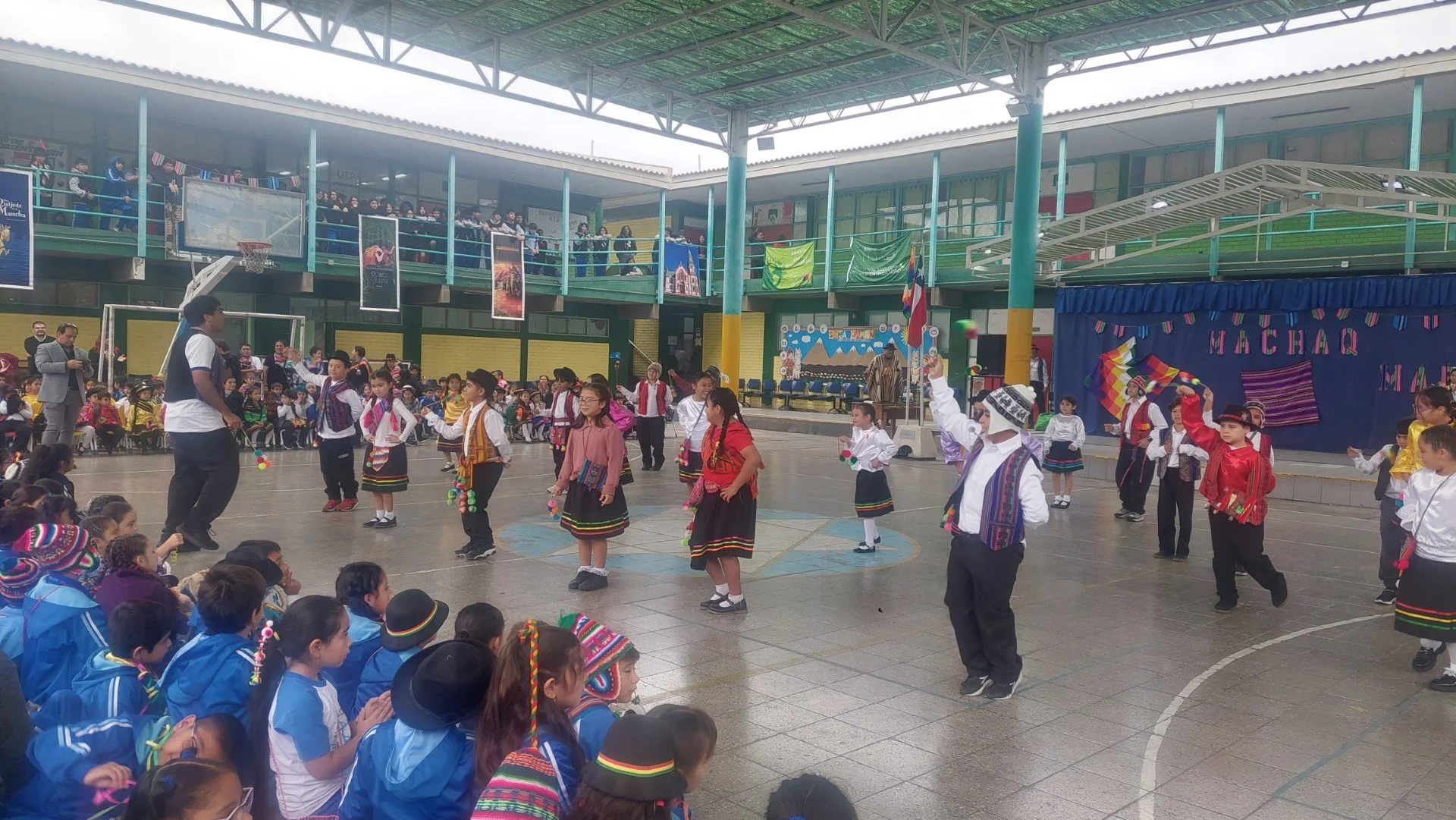
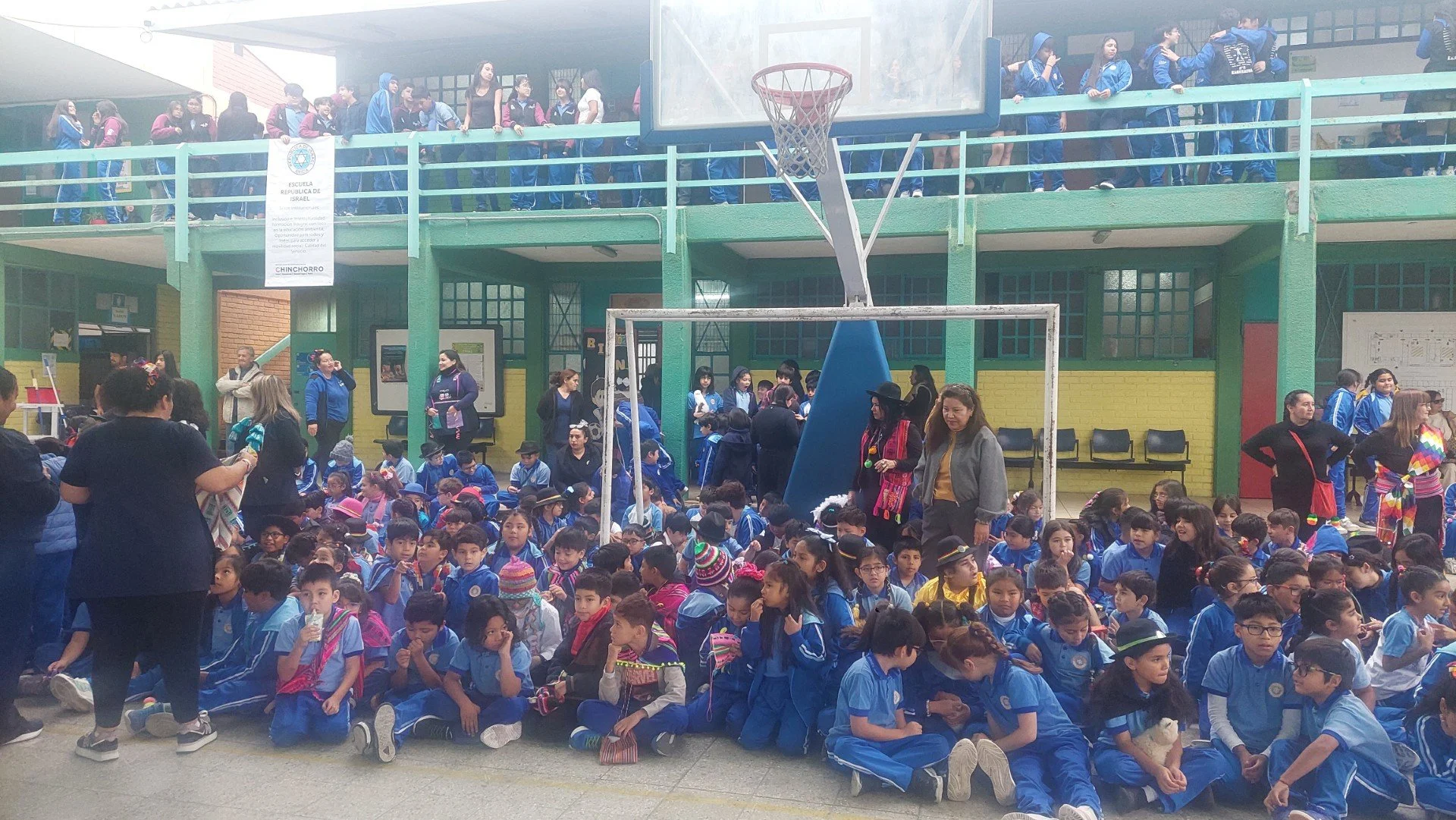
The school's principal, Mrs. Ruth Dini, together with her Management Team, Life Link Coordinators Patricia Eloy and Gladys Hernández, the teachers who organized the ceremony, Mr. Gabriel Fernández and Katia Fernández, as well as all teachers and students from the Preschool levels (Pre-Kindergarten and Kindergarten) and Primary Education (Grades 1–8), presented an intercultural activity called Machaq Mara, also known as the Aymara New Year.

Machaq Mara is an ancestral ceremony through which the Andean peoples celebrate the winter solstice at dawn, when the rays of Tata Inti (Father Sun) reach Pachamama (Mother Earth), marking the beginning of a new cycle in the life of nature and humanity.

OBJECTIVE OF THE ACTIVITY

To encourage students to value the social and cultural diversity of the Andean peoples.

Students participated in a large intercultural activity centered on Machaq Mara.

ACTIVITIES

(Conducted throughout the month of June according to the annual plan.)

  • Meetings were held with coordinating teachers from all educational levels to organize this year's large intercultural activity related to Machaq Mara.

  • Students at each grade level listened to their teachers and watched educational videos in their classrooms to learn about the meaning of Machaq Mara.

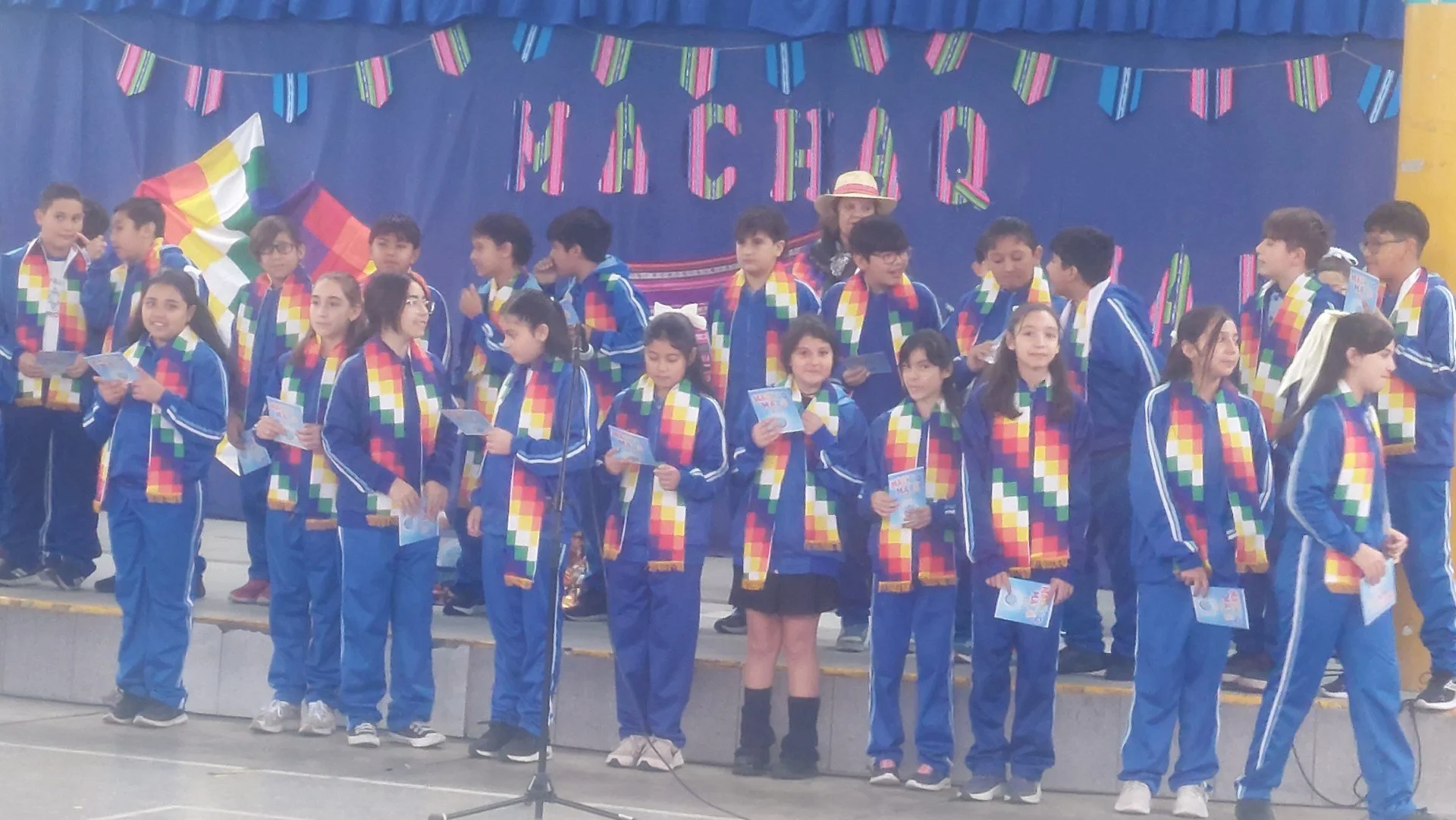
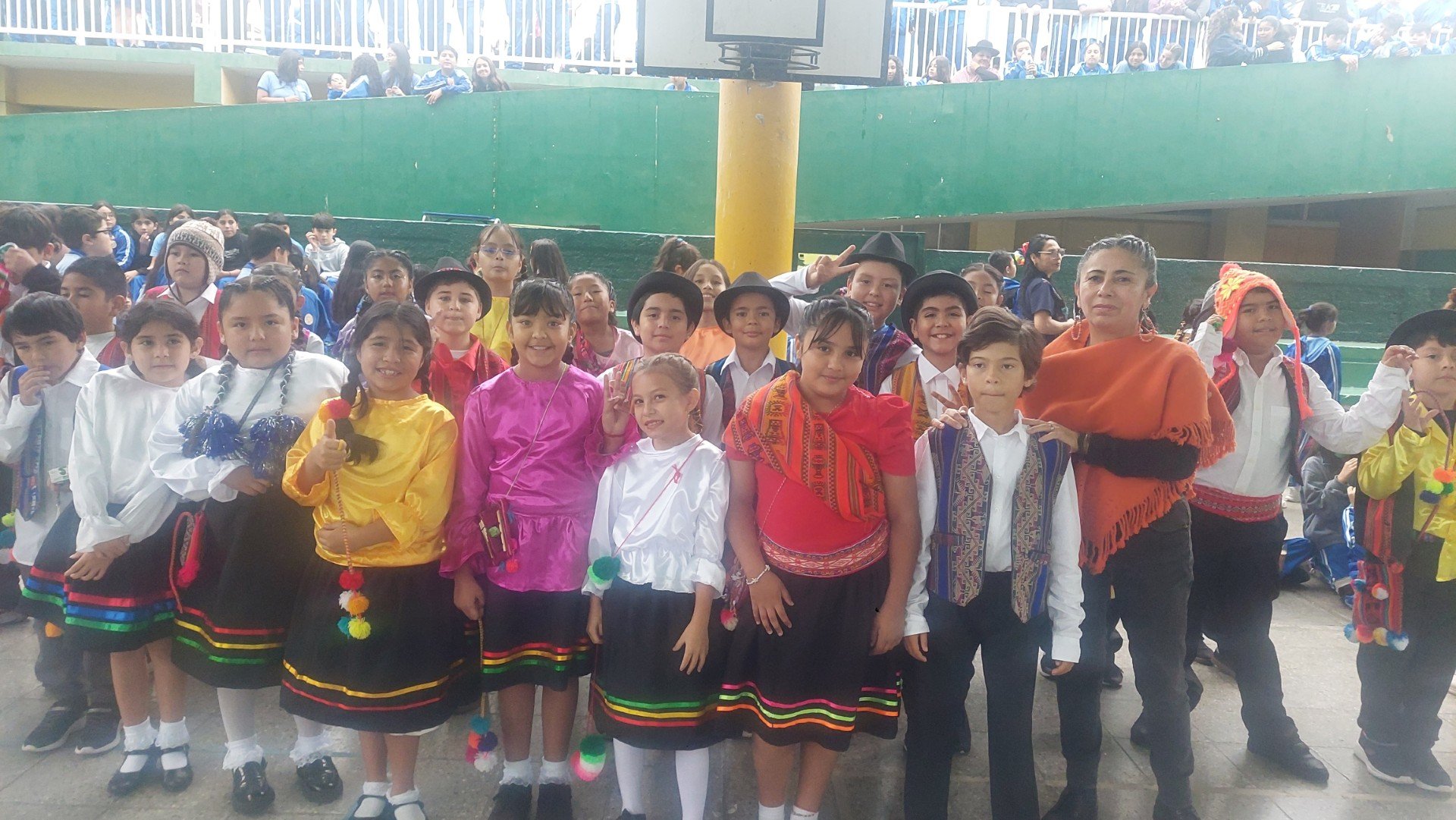
  • Students learned traditional dances while wearing Aymara clothing in preparation for the ceremony and also became familiar with the colors of the ancestral Aymara flag.

CONCLUSION

The Chilean flag was raised (see photo) to mark the beginning of the Machaq Mara intercultural activity. (The Aymara flag was also displayed above the flagpole.) Eighth-grade students sang the Chilean National Anthem (see photo).

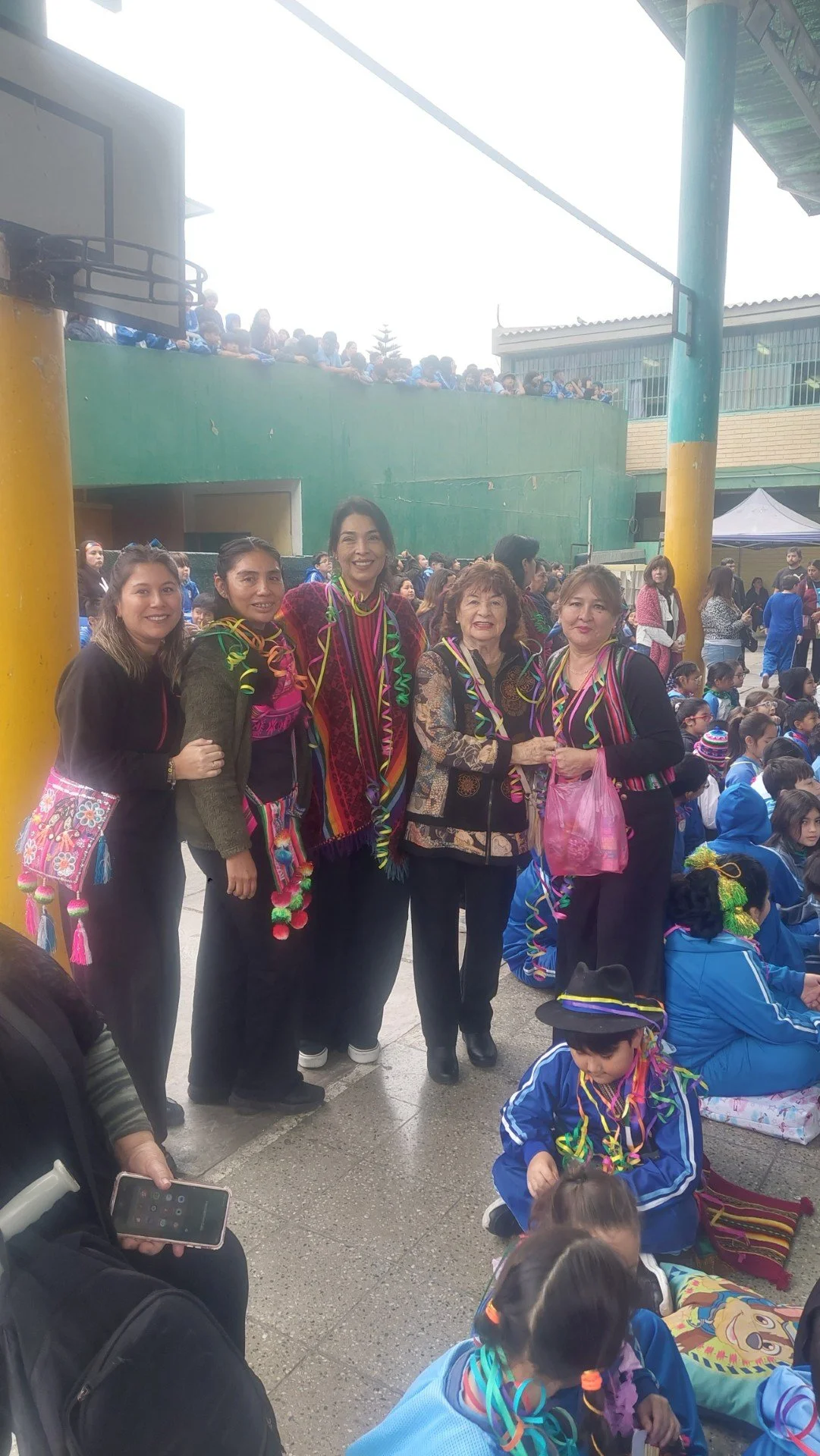
The students demonstrated the values represented by the three "C's" of the Life Link philosophy within the school curriculum, which closely align with Aymara philosophy. A total of 1,370 students participated, along with all teachers, all school staff, invited guests, Life Link Coordinators Patricia Eloy and Gladys Hernández, and local authorities from Arica.

Principal Mrs. Ruth Dini took part in the Machaq Mara ceremony, accompanying the proceedings throughout (see photo), including the prayers and petitions for the preservation of the sacred hills of our city, for the health of those who are ill, for peace, and for the protection of nature. It was truly moving and beautiful to hear everyone loudly and simultaneously respond with "Jallalla!" in support of these petitions.

Note: Each time a petition is made during the Aymara ceremony, the students, attendees, and invited guests respond together by saying "Jallalla!"

At the conclusion of the Aymara ceremony, the entire school community participated in traditional Aymara dances in the school courtyard, with students from the different grade levels taking part (see photo).

The entire educational community participated in an atmosphere of excellent school coexistence and a culture of peace. Guest teacher Mr. Gabriel Fernández and his daughter Katia conducted the ceremony on the stage. The event included the participation of all 1,370 students, all teachers, all school staff, invited guests, Life Link Coordinators Patricia Eloy and Gladys Hernández, and local authorities from Arica.
Innovating for You, for Me, and for Others

Escuela D4 AricaEscuela D4 Arica

Objective

To learn the location of the brain lobes and their most important functions that allow a person(student) to perform actions of self-care and care for others (actions from the Life Link NGO manual), culminating in an exhibition called “Innovating fo


Participants

Sixth-grade students. Age: 12 years old


Activities
(two hours per week) from October to November


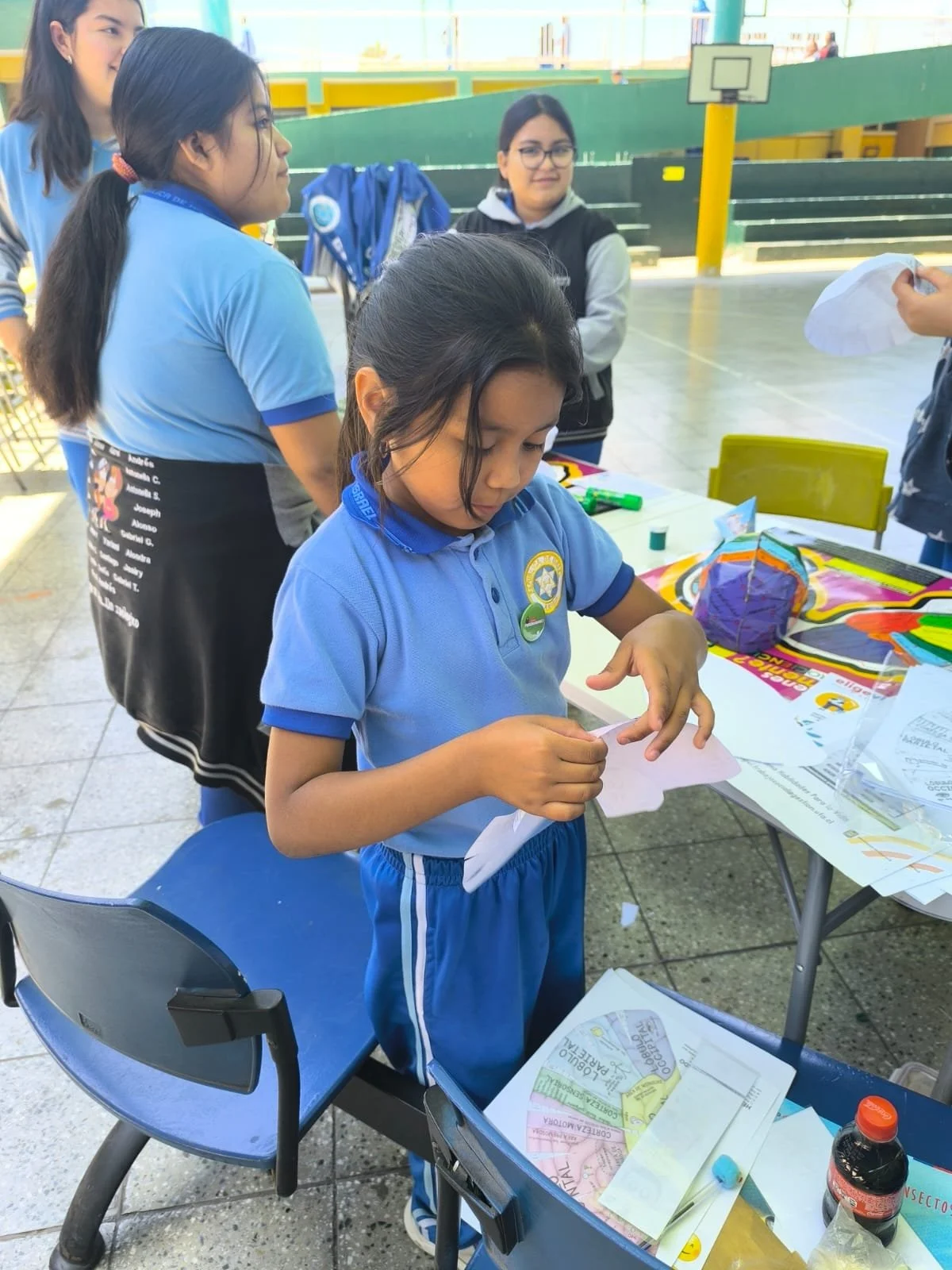
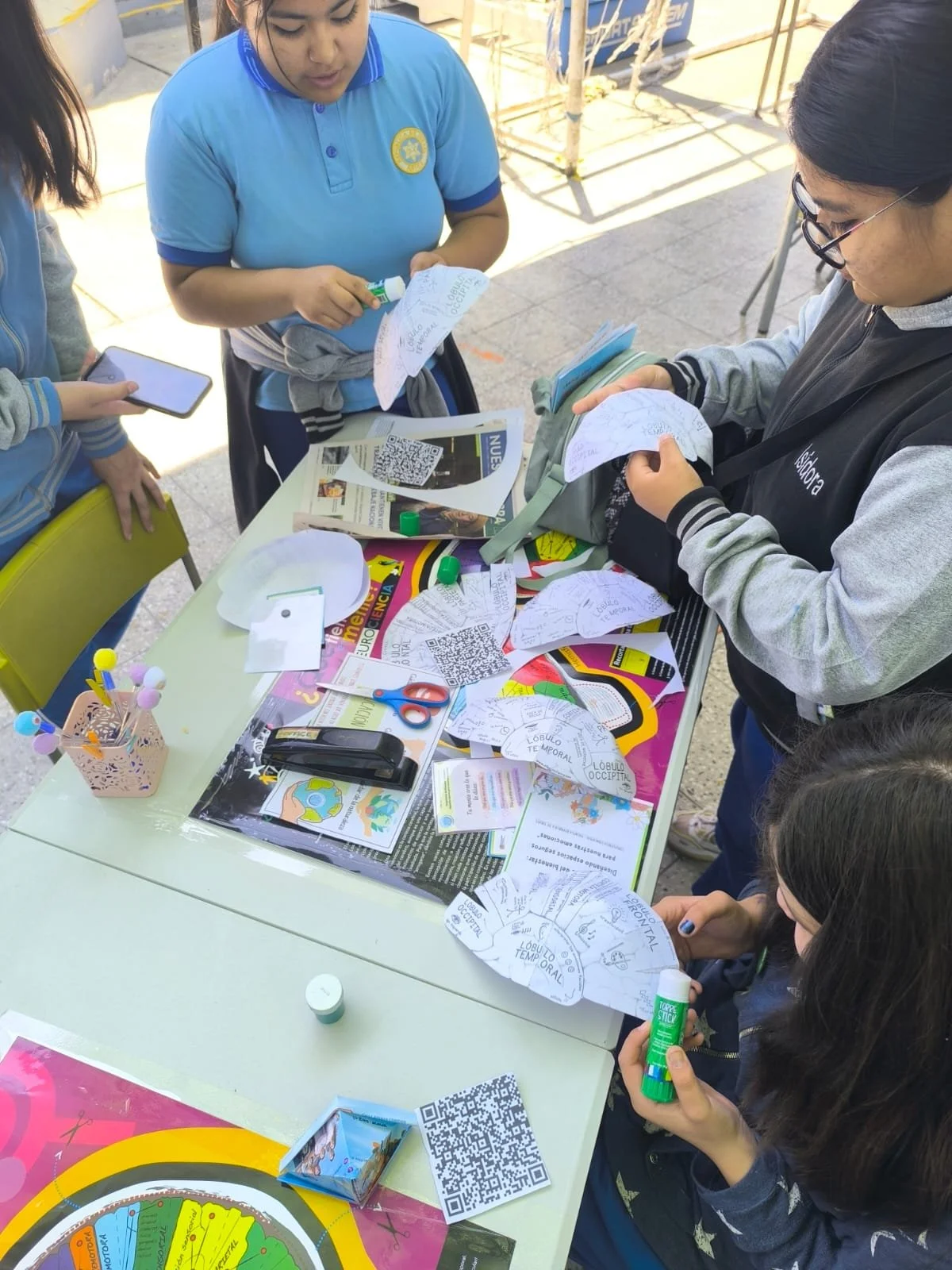
The teachers explain to the participating students the location of the four main lobes of the brain (frontal, parietal, temporal, and occipital) and their functions using diagrams and texts. The students listen, and learn the functions of each lobe over a period of four weeks. To test their learning, the students must draw a brain and its lobes correctly. Then they cut out the brain and put color each lobe. See photo
The students analyze, conclude, and learn that stimulating self-care and caring for others depends on the functions of the four lobes of the brain and engaging in activities such as those proposed in the Life Link NGO Manual. They also learn that self-care makes us feel good and allows us to care for others, and that caring for others requires caring for oneself. Texts by Hans Levander, 2008. Education for Sustainable Development. Topics: Culture of Care and Water Conservation


About the Exhibition

See photo - The students display cut-out brain drawings (on the tables). They place the brains on their heads (like hats) to demonstrate the brain’s lobes and their functions. They also display posters and drawings about Self-Care and Nature.


Conclusion

In Conclusion, the proposed objective has been achieved. Ending with an exhibition in the schoolyard

Coordination
Mrs. Ruth Dini, Principal
Mrs. Patricia Eloy, Coordinator
Mrs. Gladys Hernández, Life Link Coordinator

Hand in hand for better food and a better future

Liceul Tehnologic Agricol „Nicolae Cornățeanu”

World Food Day is celebrated annually on October 16, with the aim of raising awareness of long-term food issues.


Thus, according to the Food and Agriculture Organization of the United Nations, World Food Day 2025 calls for global collaboration to create a peaceful, sustainable, prosperous and food-secure future.
The theme for 2025 is “Hand in hand for better food and a better future”. This theme is particularly relevant in the context in which almost 700 million people suffer from hunger, and in other parts of the world, high levels of obesity and food waste indicate an unbalanced system, in which abundance and scarcity often coexist.


World Food Day 2025 also coincides with the 80th anniversary of the founding of FAO, highlighting the importance of collective action to ensure a sustainable and equitable food future. In many countries in the world, food and its security are not a problem, but there are also places where people face food crises, which endanger the existence of those communities. World Food Day was conceived precisely for this reason, to emphasize the fact that every individual must have access to decent food.


In Romania, it was established, on the same date, by Law no. 47/2016, National Day of Food and Combating Food Waste. During September-October 2025, campaigns such as "Be active, eat healthy!" are taking place in Romania, which promote healthy eating and physical activity..

Ms. Alina Chirilov, Geography teacher, organized an interesting activity on the occasion of World Food Day, in which students from different classes participated. World Food Day 2025 reminds us that every action matters – from what we put in our shopping carts to how we prevent food waste. Health starts on our plates, and a safer future for all is built hand in hand, through informed choices, responsible behaviors and community solidarity.

Multiculturalism - Machaq Mara

Escuela D4 Arica

Celebrate the ancestral MACHAQ MARA, which marks the beginning of the new Solar Cycle coinciding with the Andean New Year, strengthening students' appreciation for the social and cultural diversity of the Arica and Parinacota region with dance and music in June 2025.


PARTICIPANTS
All students of the school who are in Early Childhood Education (Prekindergarten and Kindergarten) - Basic Education (1st to 8th grade), and all teachers from each grade, assistants, parents, guests who gave talks, coordinators, pedagogical leaders, and the principal.


ACTIVITIES
Activities carried out in May and June
meetings were held with the coordinating teachers from each level of education and the Principal, Mrs. Ruth Dini, at the beginning of the school year to organize the celebration of Machaq Mara in June 2025.
Talks were held to highlight Machaq Mara, an ancestral celebration that marks the beginning of the new solar cycle, coinciding with the Andean New Year. The guests who gave the talks were parents of Aymara origin and history teachers. The talks were held in classrooms in each of the participating classes from the aforementioned levels.
Afterward, and supported by the talks received, each subject teacher conducted meaningful and collaborative pedagogical experiences among the students, teachers, and parents in a climate of self-care, care for others, and care for others. These activities were carried out from May to June, based on the students' own beliefs, those of their parents and/or ancestors, and the talks received. Students from each class at the participating levels prepared the celebration with music and dances, wearing appropriate costumes.


CONCLUSIONS
The celebration of the ancestral MACHAQ MARA was achieved among the students of Preschool (Prekindergarten and Kindergarten) and Elementary Education (1st to 8th grade) at School D4 in Northern Arica, Chile, strengthening their appreciation for the social and cultural diversity of the Arica and Parinacota region.
All students at the school attended, sitting or standing in the courtyard, observing the MACHAQ MARA celebration. This same celebration was held in their classrooms by all participants at School D4 at the aforementioned levels.
All participating students strengthened their identity and respect for indigenous peoples with an intercultural approach through the celebration of MACHAQ MARA.
Principal Ruth Dini and teachers Patricia Eloy and Gladys Hernández, Life Link coordinators.

School Trip

Al-ghadir School

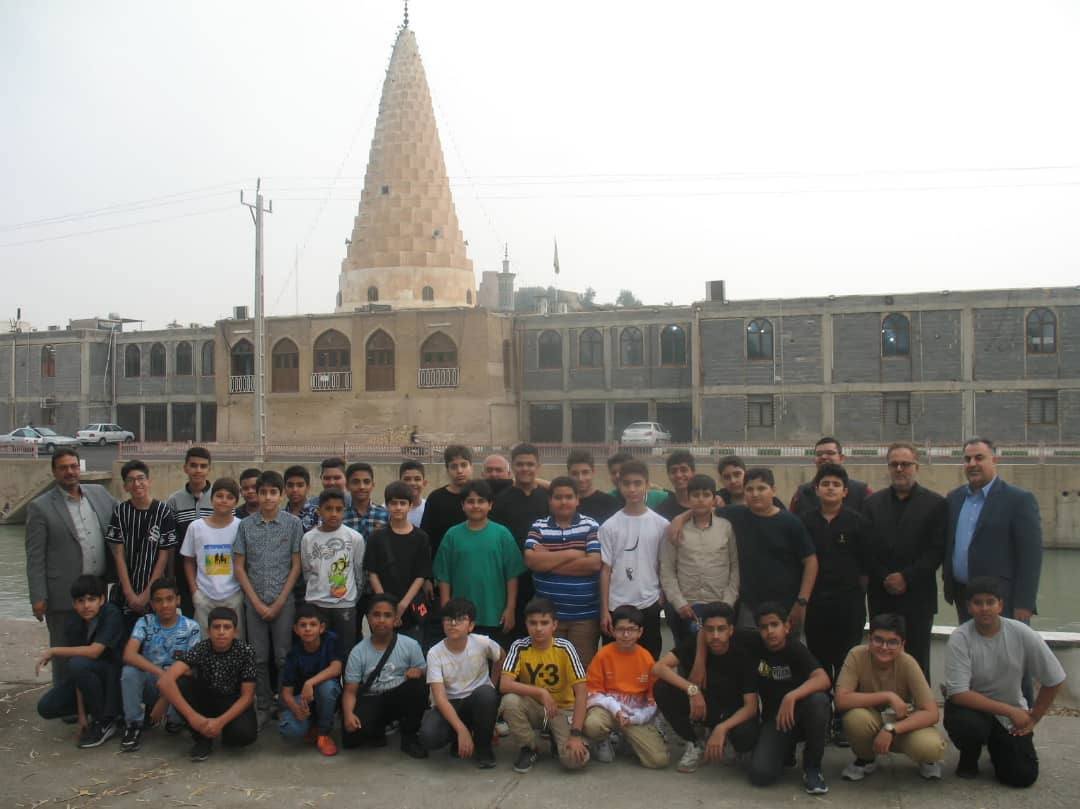
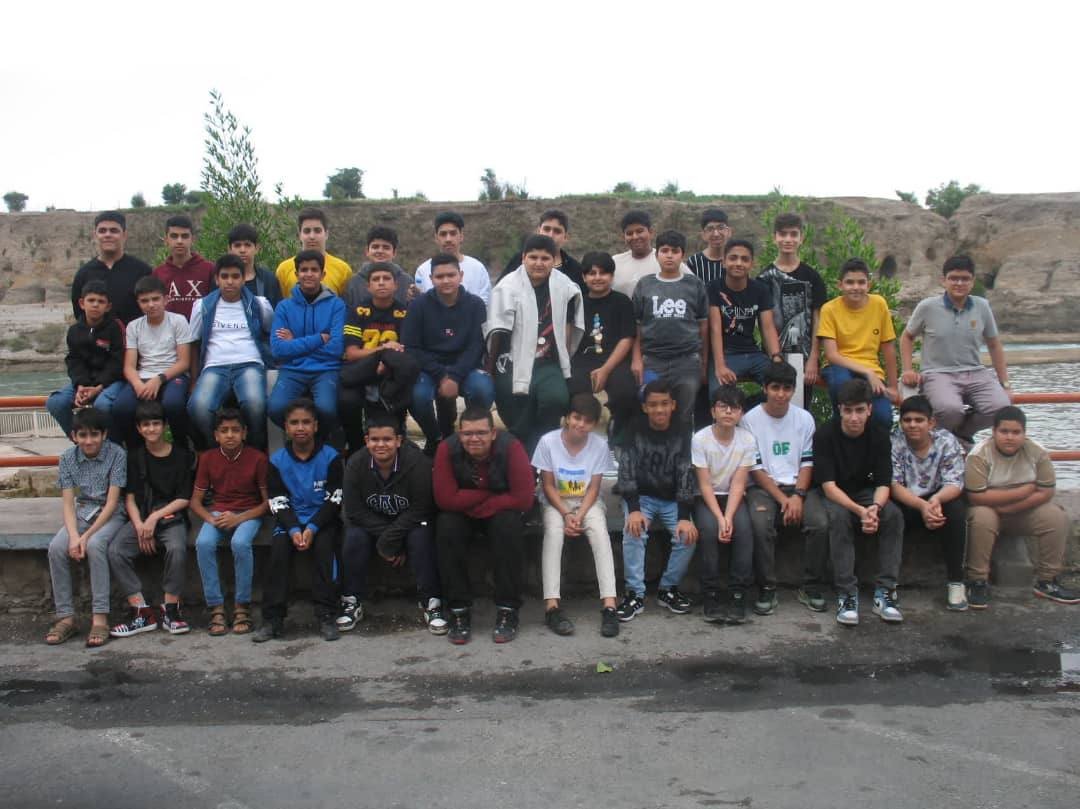
  In line with pursuing its scientific and cultural goals and diversifying educational programs for students, Al-Ghadir School organized a scientific/historical camp to visit Shush and Dezful cities for two days.

  This scientific tour started on November 24 with the presence of 36 students and a number of respected teachers. Starting from the origin of Khorramshahr city, dear students first visited Daniyal Nabi's tomb. As one of the historical cities of Iran with world-registered monuments in UNESCO, the city of Shush is of special importance, and the students witnessed its ancient manifestations during this one-day trip. At the end of the first day of the trip, the students left for Dezful city and stayed at Shahid Ghazi camp.

On the 25th of November, the students visited the historical monuments of Dezful City, and in this experience, cultural and historical teachings were transferred to the students by the respected teachers. Also, considering the membership of Al-Ghadir School in the international organization Life Link and following the school's commitment to inform the students about the environmental conditions of the province, in the continuation of the trip of environmental issues of the province by visiting the house of Sofal and Ali Kaleh Dam in The city of Dezful was explained to the students, and in the meantime, the importance of the establishment of the Ali Kale dam and the dimensions of its environmental effects were explained.

This camp was held for two days with the active participation of dear students and the efforts of the precious teachers and officials of Al-Ghadir School and ended on the 25th of November with the return to Khorramshahr city.

In the end, Al-Ghadir School expresses its utmost gratitude to all the students and teachers for the responsibility of all the attendees and the kind attention of the dear parents.

First Aid Team

Liceo Artistico

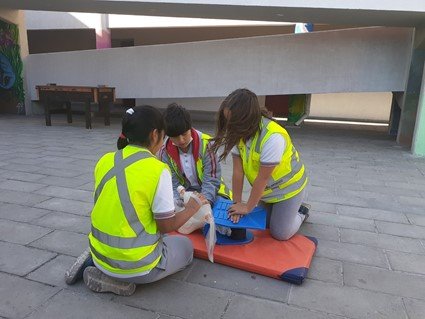
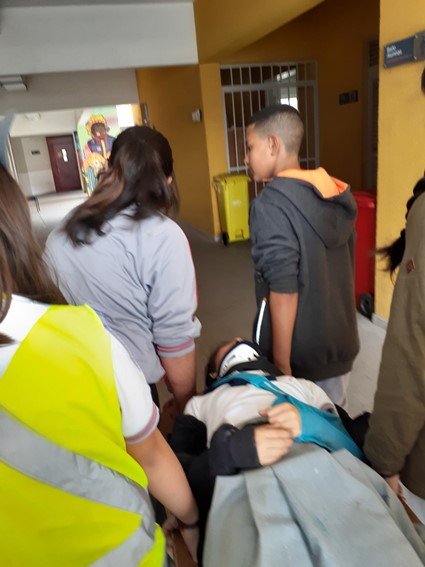
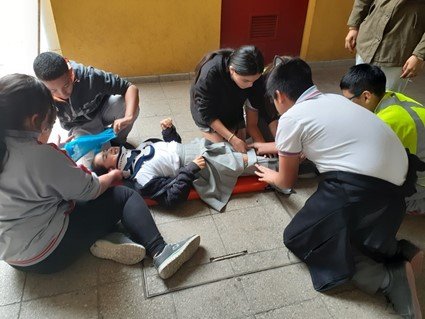
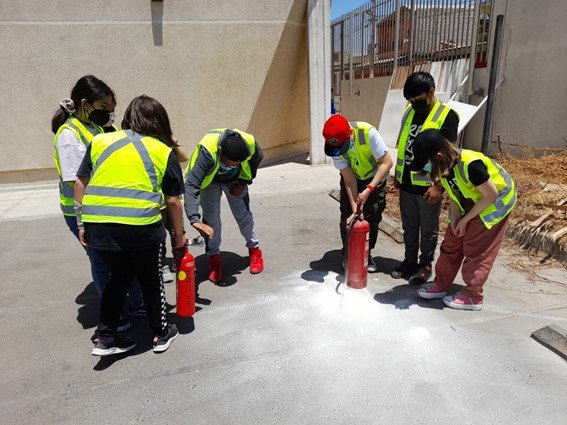
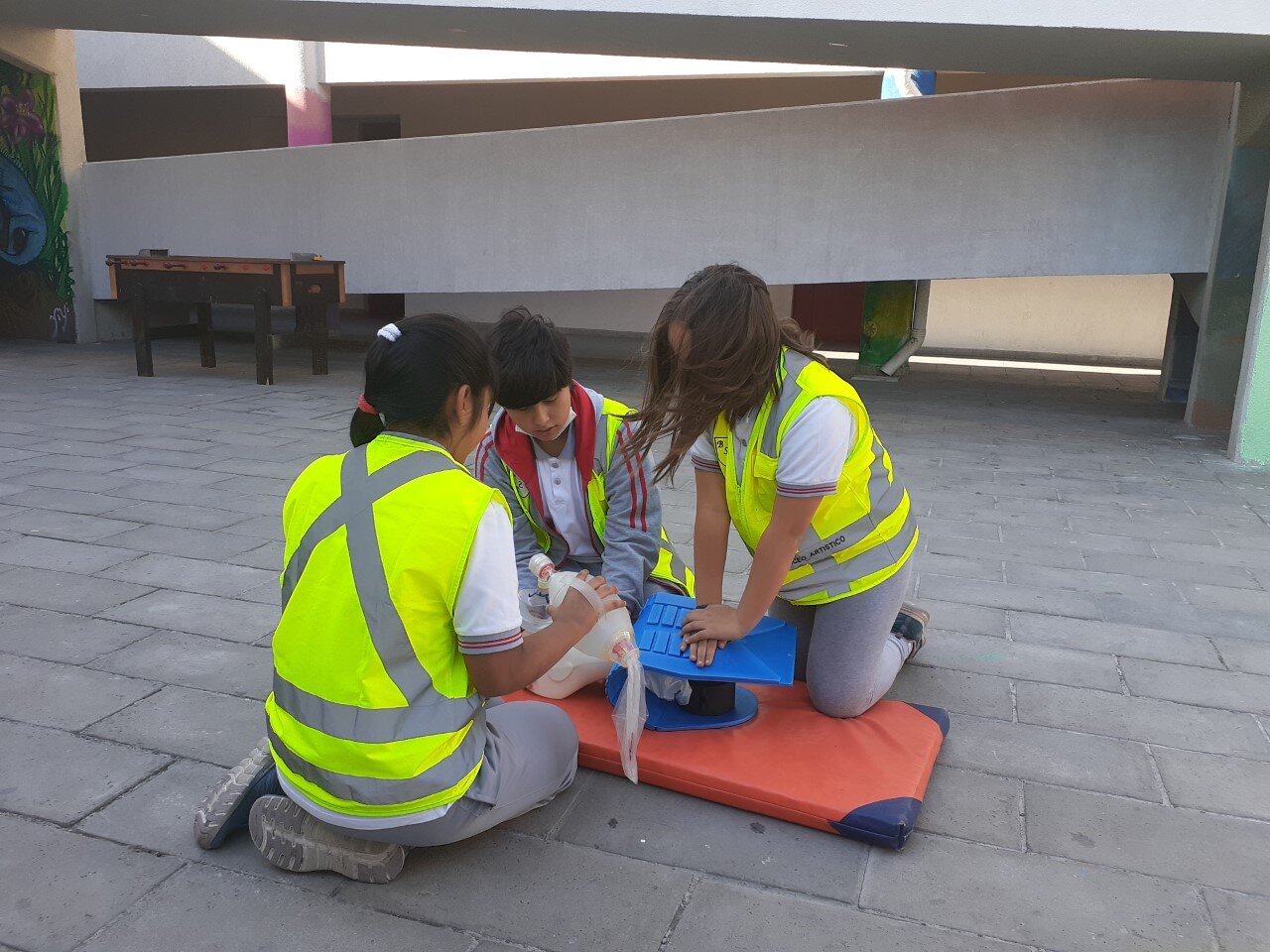
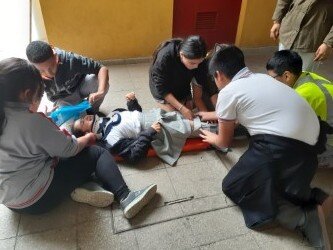
The teacher Roberto Parra, invited some profesionals who prepares a group of students, a TEAM of 15, who made up a First Aid team (see photos) because Arica is a city that has had river overflows, due to changes in the climate and because it is a seismic city. In this city earthquakes of great magnitude have occurred.

Students learn to use fire extinguishers to put out fires, to transport people on stretchers, and to know how to call firefighters, ambulances, police officers and to maintain order at schools and carried out first aid in case of accidents, including what bandages to use, and how to carry them on stretchers, as well as what to do with those who lack oxygen at that moment

The team works on a special schedule every day in the afternoons in such a way that the management of the Lyceum provides the tools and space, respecting the Pandemic regulations.

Coordinator Gladys Hernández

Aiding Risk Groups In Our Community

Sigtuna Skolan Humanistiska Läroverket

During this unprecedented time, many in our communities around the world have been forced to change their lifestyles and be careful when performing seemingly harmless tasks such as grocery shopping. Many have been forced to completely distance themselves from society for fear of the COVID-19 pandemic.

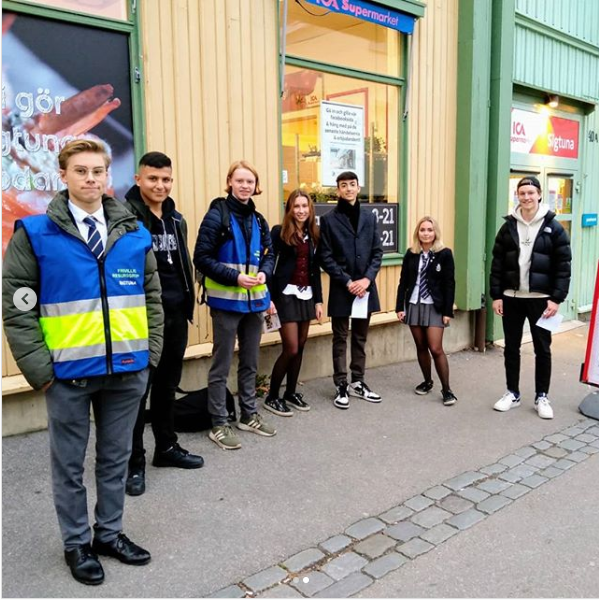
In Sigtuna, Sweden there is a group called FRG (Frivilliga Resurs Gruppen or voluntary recourse group). FRG are an organisation consisting of volunteers who help out in crises such as this pandemic. They have set up a system to deliver food and other items to risk groups in Sigtuna who are not able to shop on their own.

On 11th November students at Sigtunaskolan Humanistiska Läroverket (SSHL), in Sigtuna, Sweden met with a representative from FRG at the local grocery store to learn the procedure and complete a few orders. Two orders were completed and delivered out into Sigtuna by the volunteers. This effort has been continued throughout 2020 and we are persisting in our efforts even now in 2021. We hope to continue this work for as long as there is a need in Sigtuna.

It is important that we make efforts to aid those in our communities who are in need around the world. Caring for others is a central pillar of the Life-Link ethos and is a vital part of society. The purpose of this continuous action is to help those in need in our local community and develop new skills within the students at our school.

Care,
Seán Berglund
Student Co-chair of Life-Link SSHL

Annotation 2020-11-17 095951.png

Containing COVID-19

Berginya 684

In connection with the situation that is happening in our world, namely the pandemic and the spread of coronavirus, our school has taken certain security measures.

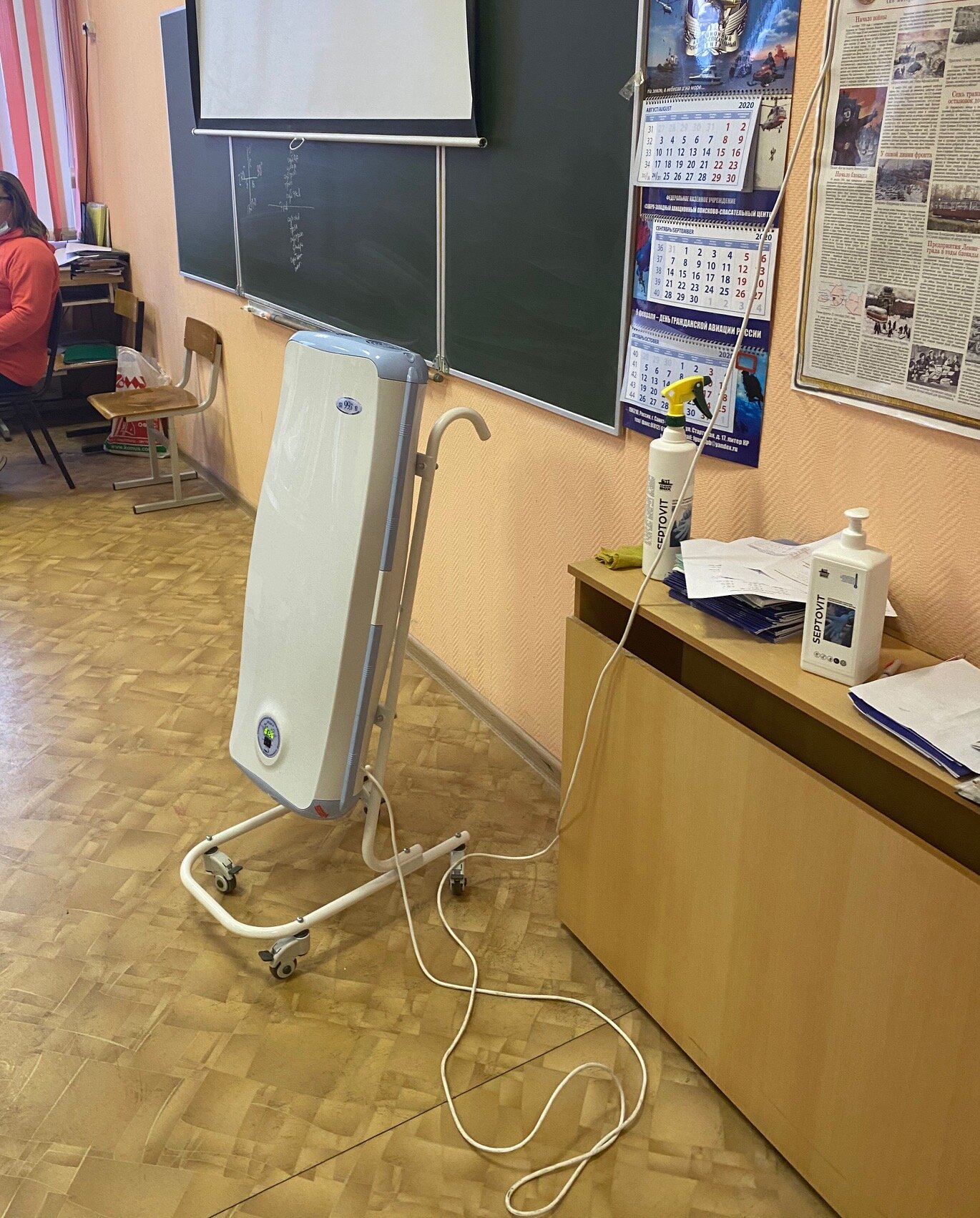
First of all, we equipped our school's classrooms with masks in the form of decorations.This is quite convenient for those who do not have a mask at home. You can just take it from the ceiling. Also we have equipped our classrooms with antiseptics that are used by every person who enters the room.


Additionally every person who enters the school approaches the guard who measures the students temperature. Teachers also have personal protective equipment as masks and gloves. Last but not least the class contains purifier of air, which is important for containing the spread of the virus.

First Aid

Liceo Artistico

The teacher Roberto Parra has trained a group of Life-Link students to be prepared in case of an unexpected accident. Especially to be prepared for earthquakes because the city of Arica is highly sensitive to seismic shocks. In the photos you can see the practical classes carried out with the support of teacher Mr. Parra, expert in first aid. The group received training for several months so they are able to help the school and community members in case of emergency.